Professional Standards

Regulatiion

Building the Future of Sport Massage in South Africa

A Development Update from the Sport Massage Association of South Africa (SMASA) Sport Massage in South Africa is entering an important stage of professional development. For many years, Sport Massage Therapists have supported athletes, active individuals, fitness participants and members of the public. Practitioners work in a variety of environments, including private practices, gyms, sporting events, teams and fitness facilities. As the profession continues to develop, an important question needs to be addressed: What should a properly trained and competent Sport Massage Therapist be educated and authorised to do in South Africa? This question is at the heart of the work currently being undertaken by the Sport Massage Association of South Africa (SMASA). A Profession Being Developed for the Future SMASA is currently working on the development of a clear professional framework for Sport Massage Therapy in South Africa. The aim is to establish greater clarity around: The objective is not simply to create another qualification. The objective is to help establish a safe, consistent and professionally accountable Sport Massage profession. A Proposed Two-Level Professional Model One of the key areas currently being developed is a proposed two-level professional model: NQF Level 5 – Basic Sport Massage Therapist The proposed Level 5 practitioner represents the foundational level of Sport Massage practice. The focus is on developing competence in: The proposed professional pathway is: Consult → Screen → Assess → Treat → Reassess → Advise → Refer The emphasis is on safe, competent foundational practice. NQF Level 6 – Advanced Sport Massage Therapist The proposed Level 6 practitioner represents progression beyond foundational Sport Massage practice. Importantly, the progression is not simply about learning more massage techniques. The proposed Level 6 framework places greater emphasis on: Knowledge → Assessment → Interpretation → Clinical Reasoning → Treatment Planning → Advanced Treatment → Reassessment → Evaluation → Referral This may include increased competence in: The proposed Level 6 pathway is: Consult → Assess → Interpret → Reason → Plan → Treat → Reassess → Evaluate → Modify/Refer This represents an increase in knowledge, responsibility, assessment capability and professional decision-making. Defining What Sport Massage Is A significant part of the development work is establishing a clear professional identity for Sport Massage Therapy. The proposed framework defines Sport Massage as a non-invasive soft-tissue profession providing Sport Massage and related soft-tissue interventions to support: Sport Massage Therapists may conduct consultation, screening and assessment appropriate to their education and demonstrated competence. However, an important distinction is being maintained: Assessment and clinical reasoning within Sport Massage are used to determine treatment suitability, guide Sport Massage intervention, monitor treatment response and identify when referral may be required. They do not constitute medical diagnosis. Health, Movement and Functional Screening As part of the framework, SMASA is also working towards clearer and more consistent terminology. Health Within Sport Massage practice, health screening considers relevant factors that may influence the client’s safety, suitability for treatment and response to Sport Massage. This may include relevant health history, previous injuries, medication, lifestyle, activity levels, current symptoms, contraindications, precautions and red flags. Movement Movement assessment involves observing the movement and function of the body or relevant body segments. Depending on the practitioner’s level of training and competence, this may include posture, movement quality, range of motion, mobility, gait and functional or sport-specific movement. Functional Movement Screening Functional movement screening may be used to observe selected movement patterns and identify limitations, asymmetries or movement-quality concerns. Where a specific screening system such as FMS is used, the practitioner must be appropriately trained and competency-assessed. Movement screening remains screening — not diagnosis. PAR-Q The Physical Activity Readiness Questionnaire (PAR-Q) may assist with initial screening and identification of potential health concerns requiring further consideration. A PAR-Q does not replace a comprehensive consultation and does not constitute medical clearance. Professional Boundaries Matter As Sport Massage develops, maintaining clear boundaries with other professions is essential. Sport Massage Therapy is not intended to replace: A Sport Massage Therapist may work alongside these professionals while providing complementary Sport Massage and soft-tissue services within their own scope. For example, a Sport Massage Therapist may contribute soft-tissue support during an athlete’s rehabilitation process where appropriate, but does not replace the professional responsible for the client’s medical or rehabilitation management. Similarly, a Sport Massage Therapist does not independently provide medical clearance or make medical return-to-play decisions. The Importance of Knowing When to Refer A professional Sport Massage Therapist needs to know not only what they can do, but also when they should not treat. The proposed framework places strong emphasis on recognising: The decision-making principle is: MODIFY → POSTPONE → DECLINE → REFER depending on the circumstances. This is an important part of professional practice and client protection. Pitch-Side and Sporting Event Practice The development work is also considering the role of appropriately trained Sport Massage Therapists within sporting events and pitch-side environments. Where the relevant competencies are specifically included in training and the practitioner has been assessed as competent, this may include: Being present pitch-side does not, however, give a Sport Massage Therapist authority to diagnose acute injuries, provide medical clearance or make independent return-to-play decisions. Additional Techniques and Professional Scope Another important principle being considered is that additional training does not automatically expand a practitioner’s professional scope. This is particularly relevant to techniques such as: The proposed principle is: Education → Training → Supervised Practice → Competency Assessment → Appropriate Practice A practitioner should only perform a technique where they have the appropriate education, training and demonstrated competence, and where the technique is appropriate, legally permitted and appropriately insured where applicable. Invasive Techniques The proposed Sport Massage qualification is based on a non-invasive professional model. Invasive procedures, acupuncture and needling are therefore not being positioned as core Sport Massage competencies. Where an individual holds another qualification or professional authority that permits an additional procedure, that practice must remain subject to the separate profession’s applicable education, competence, scope, legal requirements and professional authority. This distinction is important: Learning an additional technique does not automatically change
Regulatiion

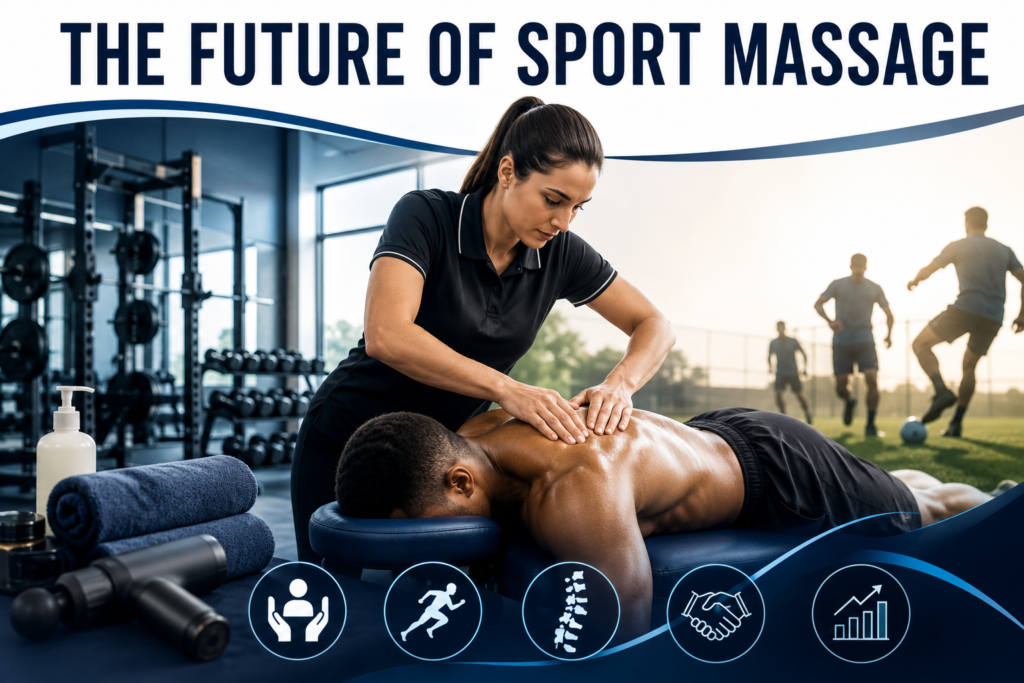
The Future of Sport Massage in South Africa: Why the Current Allied Health Discussions Matter

The sport massage profession in South Africa is entering one of the most important periods in its development. Recent stakeholder discussions surrounding proposed amendments to the Allied Health Professions Council of South Africa (AHPCSA) regulations have opened the door to critical conversations about: For professionals, students, educators, and the wider sports industry, these discussions represent far more than legislative amendments — they represent the future direction of the profession itself. A Profession in Transition Globally, sport massage has evolved significantly over the last two decades. No longer viewed purely as a relaxation-based service, modern sport massage has become increasingly integrated into: Professional sport massage practitioners now work within: South Africa is now beginning to address how these evolving roles fit within modern allied healthcare legislation. Positive Developments Within the Proposed Amendments The proposed AHPCSA amendments introduce several progressive developments that could positively influence the future of sport massage in South Africa. Integration Into Gyms, Wellness Centres & Shared Healthcare Spaces One of the most significant developments is the recognition of multidisciplinary and shared practice environments. This creates opportunities for practitioners to operate within: This shift reflects the reality of how modern sport massage is practised internationally and may significantly improve: For the profession, this represents a major step toward sustainability and industry growth. Recognition of Mobile and Event-Based Practice The proposed framework also acknowledges: This is particularly important for sport massage practitioners who frequently operate within: These settings form a natural part of the profession and support athlete accessibility across multiple sporting codes and performance levels. Telehealth and Modern Service Delivery The inclusion of telehealth and digital consultation frameworks is another progressive development. While sport massage remains a hands-on profession, modern practice increasingly involves: Clear guidance around telehealth could help practitioners responsibly integrate modern communication systems into their services while maintaining professional and ethical standards. One of the Biggest Discussions: Assessment vs Diagnosis Perhaps the most important discussion surrounding the future of sport massage involves the distinction between: The current regulatory discussions indicate that therapists may treat patients but may not medically diagnose conditions. This distinction is critical. Sport massage practitioners routinely perform: These processes are essential for safe and effective treatment. However, they are fundamentally different from medical diagnosis. The profession continues to advocate for clearer recognition of functional assessment as an essential component of competent sport massage practice while respecting the boundaries of medical diagnosis. This distinction is necessary to: Why Structured Treatment Plans Matter Another area generating significant discussion is the proposed restriction on: Within sport massage and athletic recovery environments, structured treatment plans are internationally recognised practice models. Athletes often require: These systems are not simply commercial strategies — they are often clinically relevant approaches designed to support continuity of care and long-term athlete wellbeing. The profession continues to advocate for balanced regulation that protects patients while still allowing structured, ethical treatment planning. The Importance of Ethical Advertising & Professional Positioning The proposed amendments also address advertising and professional communication. Modern healthcare professionals operate within highly competitive environments where: all play important roles. The profession broadly supports: At the same time, practitioners require the ability to communicate their role within: Balanced regulation is essential to allow professional growth while maintaining ethical integrity. Artificial Intelligence and the Future of Healthcare Practice One of the more forward-thinking aspects of the amendments is the inclusion of artificial intelligence (AI) within regulatory discussions. However, concerns remain regarding how broadly AI may be interpreted within healthcare legislation. Within education and practice management, AI is increasingly used for: The profession supports responsible regulation of AI in relation to clinical decision-making while avoiding unnecessary restrictions on educational and administrative innovation. Why These Discussions Matter for Students and Graduates For students and future practitioners, these discussions are especially important because they directly influence: As the profession grows, the need for: becomes increasingly important. The future sustainability of the profession depends on balancing accessibility, quality education, public safety, and professional growth. Building a Stronger Professional Identity One of the greatest opportunities arising from these discussions is the ability to define sport massage more clearly within South Africa. Modern sport massage is increasingly recognised internationally as a profession focused on: This professional identity is essential for: A Positive Direction for the Future Overall, the proposed amendments represent an important and necessary step toward modernising allied healthcare regulation in South Africa. While certain areas still require refinement and clarification, the current discussions create an important opportunity for: Most importantly, they allow the sport massage profession to actively participate in shaping its own future. Final Thoughts The future of sport massage in South Africa will depend not only on legislation, but also on: This moment represents more than policy reform. It represents an opportunity to help build a profession that is: The ongoing stakeholder discussions are therefore not simply regulatory conversations — they are foundational conversations about the future of the profession itself.

Regulatiion

Why SMASA Was Created

Professional Context The sports massage industry in South Africa has experienced significant growth over recent years, driven by increased awareness of recovery, injury prevention, and performance optimisation. From athletes to everyday individuals, more people are recognising the value of soft tissue therapy. However, despite this growth, the profession has developed without a clear, unified structure. This has created challenges for both practitioners and the public. The Problem: A Fragmented Industry Unlike more established professions, sports massage in South Africa has historically lacked: As a result: Without structure, even skilled therapists struggle to gain the recognition they deserve. International Perspective In countries such as the United Kingdom, sports massage has evolved into a structured and respected profession. This has been achieved through: These systems provide:👉 Public trust👉 Professional credibility👉 Career pathways for therapists This highlights what is possible when a profession is properly supported. The Gap in South Africa South Africa presents a unique opportunity. While demand for sports massage continues to grow, there remains: This gap not only affects therapists, but also impacts: The Creation of SMASA The Sport Massage Association of South Africa (SMASA) was established to address these challenges. As a non-profit organisation, SMASA was created with a clear purpose:👉 To bring structure, clarity, and credibility to the profession SMASA exists to: It is not simply an organisation — it is a foundation for the future of the profession. Our Role in the Industry SMASA aims to act as the central body that: By doing so, we create a profession that is:👉 Structured👉 Trusted👉 Sustainable Practical Impact The creation of SMASA provides real-world benefits: For therapists: For the public: For the industry: Professional Standards and Ethics SMASA is built on the principle that professional growth must be grounded in: By establishing these foundations, we ensure that the profession develops responsibly. SMASA Position Statement The Sport Massage Association of South Africa (SMASA) was created to support the structured development of sports massage as a recognised profession. We are committed to: Conclusion SMASA was created because the profession needed more than growth — it needed direction. By bringing structure to a fragmented industry, SMASA is helping to shape a future where sports massage is recognised, respected, and fully integrated into the health and fitness landscape. Join the Movement The future of sports massage in South Africa is being built now. 👉 Be part of a profession that is growing with purpose, structure, and vision.

Regulatiion

Scope of Practice: What Sports Massage Therapists Can and Cannot Do in South Africa

Professional Context As the sports massage profession continues to grow in South Africa, there is an increasing need for clarity around the scope of practice for therapists. Without clear boundaries, there is a risk of: At the Sport Massage Association of South Africa (SMASA), we recognise that defining scope of practice is essential to building a credible, ethical, and professionally respected industry. What is Scope of Practice? Scope of practice refers to the range of activities, responsibilities, and interventions that a practitioner is trained, competent, and permitted to perform. It is guided by: For sports massage therapists, scope of practice ensures that treatment remains safe, appropriate, and effective, while respecting the roles of other healthcare professionals. What Sports Massage Therapists CAN Do Within the SMASA framework, qualified sports massage therapists are trained to: ✔ Conduct Client Assessment ✔ Provide Soft Tissue Treatment ✔ Support Recovery and Performance ✔ Educate Clients ✔ Recognise When to Refer What Sports Massage Therapists CANNOT Do To ensure client safety and professional integrity, sports massage therapists must NOT: ✖ Diagnose Medical Conditions ✖ Perform Rehabilitation Prescriptions ✖ Treat Acute or Serious Injuries Independently ✖ Provide Medical Advice ✖ Work Outside Competence Mechanism and Role Within the Healthcare System Sports massage therapy primarily works within the musculoskeletal and neuromuscular systems, focusing on soft tissue function. Its role is to: Importantly, sports massage is supportive, not substitutive — it works best as part of a multidisciplinary team, alongside: Practical Application In practice, sports massage therapists commonly work in: Their role is to:👉 Enhance performance👉 Support recovery👉 Maintain tissue health Professional Boundaries and Ethics Operating within scope of practice is not just a guideline — it is an ethical responsibility. SMASA expects practitioners to: Failure to adhere to scope of practice can: SMASA Position Statement The Sport Massage Association of South Africa (SMASA) affirms that: SMASA is committed to developing a structured scope of practice aligned with: Conclusion Defining and respecting scope of practice is critical to the growth and recognition of sports massage in South Africa. By understanding what sports massage therapists can and cannot do, we: As the profession evolves, SMASA will continue to play a leading role in establishing clear standards that support safe, effective, and ethical practice.

Scroll to Top